

 Español
CPAP & BiPAP Guides
CPAP Mask Types: Nasal vs Nasal Pillow vs Full-Face — Which One Should You Choose?
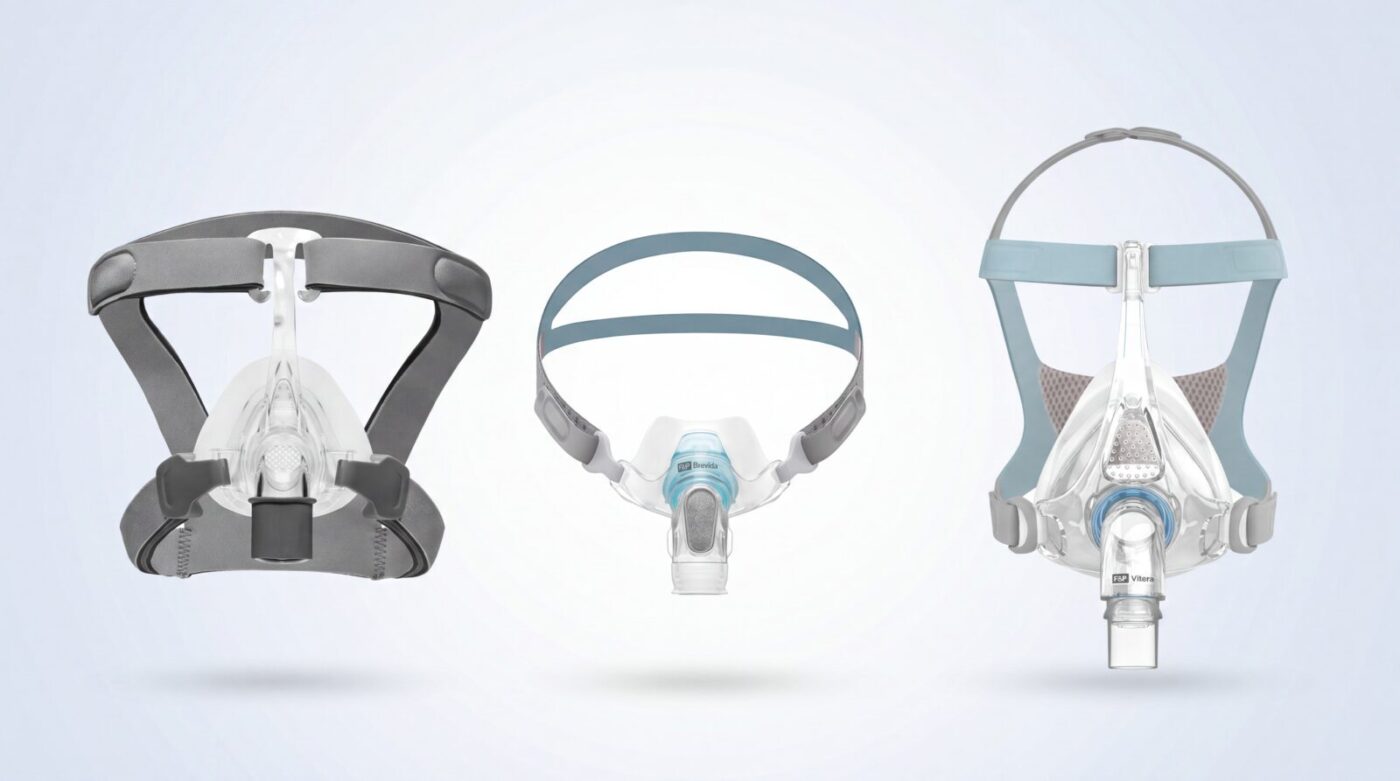
Your machine and your pressure setting were prescribed for you. The mask? Nobody really sits you down and explains that part — you get handed one type, and if it leaks, digs in, or fogs up your night, you’re left guessing whether you chose wrong or CPAP just isn’t for you. Most of the time, it’s the mask.
The good news: the mask is the one piece of your setup you get to choose freely, and swapping to the right style is often the difference between dreading the mask and forgetting it’s there. This guide breaks down the three CPAP mask types in plain language — how each one seals, who it’s built for, and how to match a style to the way you actually sleep.
In short: There are three CPAP mask types. A nasal mask seals around the whole nose — the balanced all-rounder most people start with. A nasal pillow mask seals with soft tips right at the nostrils — the lightest, least-in-your-face option, great for glasses, claustrophobia, and side sleepers. A full-face mask seals over the nose and mouth — the pick for mouth-breathers, stuffy noses, and high pressures. Masks are an accessory, so you don’t need a prescription to buy or replace one (the machine itself does need one). At American Oxygen, genuine masks start at US$75 and run to about US$190, with replacement cushions from US$29 and free U.S. shipping over US$99.
Still deciding on the machine itself? Read CPAP vs BiPAP — which do you need first, then come back to pick the mask.
Nasal masks — a seal around the whole nose
A nasal mask covers your nose with a triangular cushion that seals around the bridge and under the nostrils. It’s the middle ground of CPAP masks: more stable and better at higher pressures than pillows, but lighter and less enclosing than a full-face. Air goes in through your nose only, so it relies on you breathing (mostly) through your nose while you sleep.
Best for: most first-time users, people who want one balanced, reliable mask, and anyone whose pressure is moderate-to-high. Not ideal for: chronic mouth-breathers or people who are frequently congested — air escapes through the mouth and therapy suffers.
Nasal pillow masks — soft tips that seal at the nostrils
A nasal pillow mask skips the cushion over the nose entirely. Instead, two soft silicone “pillows” sit just inside the nostrils and seal there. It’s the most minimal, open-feeling mask — very little touches your face, nothing sits on the bridge of your nose, and your field of view stays clear. That makes it a favorite for people who feel boxed-in by bigger masks.
Best for: claustrophobia, glasses-wearers and readers, active side sleepers, and anyone who wants the least gear on their face. Not ideal for: very high pressure settings (the direct airflow can feel jetty) or people who need mouth coverage.
Full-face masks — a seal over nose and mouth
A full-face mask covers both your nose and your mouth, sealing around the outer edge. Because it delivers air to both, it keeps therapy working even when your mouth falls open or your nose is blocked. It’s the largest of the three, which some people find reassuring and others find like too much — but for the right person it’s the only style that actually works all night.
Best for: mouth-breathers, people with frequent nasal congestion or allergies, and higher pressure settings. Not ideal for: people who feel claustrophobic, or very active sleepers who tend to knock a larger mask loose.
The three mask types, side by side
| Nasal | Nasal pillow | Full-face | |
|---|---|---|---|
| How it seals | Cushion around the whole nose | Soft tips at the nostrils | Around the nose and mouth |
| Best for | Balanced, all-round first mask | Claustrophobia, glasses, side sleepers | Mouth-breathers, congestion, high pressure |
| Not ideal for | Mouth-breathers, stuffy noses | Very high pressures | Feeling closed-in, restless sleepers |
| Pressure range | Works low to high | Best low to moderate | Handles high pressure best |
| On your face | Moderate contact | The least contact | The most contact |
| At American Oxygen, from | US$75 | US$99 | US$90 |
Prices shown are live on each product page and vary by model and size kit. Masks are genuine, original-equipment interfaces from Fisher & Paykel, Philips Respironics, React Health, and more.
Pick your mask by how you sleep
The fastest way to narrow it down isn’t the brand — it’s how you actually sleep and breathe. Find the row that sounds most like you:
| If this sounds like you | Best mask type | Why |
|---|---|---|
| Your mouth falls open at night, or you know you breathe through your mouth | Full-face | It seals over the mouth too, so therapy keeps working when your mouth opens. |
| Your nose is often stuffy — allergies, deviated septum, frequent colds | Full-face | You can still breathe through your mouth when your nose is blocked. |
| Your prescribed pressure is on the high side | Full-face | The larger seal handles high pressure with fewer leaks and less “jetting.” |
| You feel closed-in or claustrophobic with anything on your face | Nasal pillow | The most minimal option — almost nothing touches your face. |
| You wear glasses, or read / watch TV in bed before lights-out | Nasal pillow | Nothing sits on the bridge of your nose, so your line of sight stays clear. |
| You’re an active side or stomach sleeper who tosses and turns | Nasal pillow | Minimal contact means less to dislodge when you move. |
| You have a full, dense beard | Full-face or a well-fitted pillow | Facial hair can break a nose-cushion seal; a pillow or a soft full-face cushion holds up better. |
| You just want the simplest all-around first mask | Nasal | The best balance of comfort, stability, and seal for most new users. |
This is comfort and fit guidance, not medical advice. Your prescribed pressure and your doctor’s setup still guide the therapy — the mask style is the part you get to tailor to yourself.
How often do you replace a CPAP mask?
Masks wear out in layers, and each layer has its own timeline. As a general guide:
- Cushion or nasal pillows — about once a month. This is the part that touches your skin and loses its seal first. When it starts leaking, going soft, or leaving marks, it’s due.
- The full mask (frame and headgear) — about every 6 months. Straps stretch out and the frame loses its shape over time, which quietly ruins your seal even if the cushion is new.
You don’t have to replace the whole mask every time. If you love your mask and just need to refresh the seal, a replacement cushion at American Oxygen starts at US$29 — for example an AirFit N20 cushion or an AirFit F20 cushion. Keeping a spare cushion on hand is the cheapest way to protect a good night’s sleep.
Will a new mask fit my CPAP machine?
Almost certainly yes. CPAP, APAP, and BiPAP machines use a universal-size tube connection, so most masks connect to most machines regardless of brand — you can run a Fisher & Paykel mask on a different brand’s machine, and so on. The tubing hooks up the same way.
The main thing to match isn’t the machine — it’s your size. Masks come in sizes (typically S/M/L, and sometimes separate “wide” or “small” cushions), and a mask that’s the right style but the wrong size will leak no matter what. Many masks ship as a “fit pack” or “all-size kit” with more than one cushion so you can dial in the fit at home. If you’re unsure, our team can help you match a style and size before you buy.
What we see most in our Doral showroom: American Oxygen is a respiratory-equipment specialist in Doral, FL, and our team fits and troubleshoots CPAP masks in person every day. The pattern we see over and over: someone starts on a nasal mask, realizes weeks in that they’re a mouth-breather, and comes back for a full-face — and suddenly the therapy they’d been fighting just works. The second-most-common fix is a claustrophobic first-timer switching to a nasal pillow and finally sleeping through the night. If your mask is the problem, changing the style usually solves it faster than anything else.
Where to buy CPAP masks (no prescription needed)
Because a mask is an accessory, you can buy or replace one at American Oxygen without a prescription and without going through insurance — cash-pay, shipped free anywhere in the U.S. on orders over US$99, or picked up at our Doral showroom. We carry genuine masks across all three styles:
- Nasal masks — browse the nasal mask collection. Popular picks: AirFit N20 (US$75), React Health Viva all-size kit (US$99), and the Fisher & Paykel Solo nasal fit pack (US$109).
- Nasal pillow masks — browse the nasal pillow collection. Popular picks: AirFit P30i starter pack (US$99) and Fisher & Paykel Solo Pillows (US$109).
- Full-face masks — browse the full-face mask collection. Popular picks: AirFit F20 (US$90), Fisher & Paykel Vitera fit pack (US$114), and the React Health Siesta all-size kit (US$129).
- Just need a fresh seal? See replacement cushions from US$29, or the full CPAP mask collection.
Not sure which style fits you? We offer bilingual (English/Spanish) support and can walk you through it before you order. You can also explore our full sleep therapy hub for machines, masks, and accessories in one place.
CPAP mask FAQs
Do I need a prescription to buy a CPAP mask?
No. A CPAP mask is an accessory, so you can buy or replace one without a prescription and without insurance. Only the CPAP, APAP, or BiPAP machine requires a prescription — the mask, cushions, tubing, and filters do not.
How often should I replace my CPAP mask?
Replace the cushion or nasal pillows about once a month (it loses its seal first), and the full mask — frame and headgear — roughly every 6 months, since straps stretch and the frame loses shape over time. If your mask starts leaking or leaving marks, it’s due.
Will a new mask work with my CPAP machine?
Almost always, yes. CPAP, APAP, and BiPAP machines use a universal-size tube connection, so most masks fit most machines regardless of brand. The key is matching your face size and style, not the machine.
Nasal or full-face mask if I breathe through my mouth?
A full-face mask. It seals over both the nose and mouth, so therapy keeps working when your mouth falls open. A nasal or nasal pillow mask only covers the nose, so a mouth-breather will lose pressure through the mouth (a chin strap is a partial fix, but full-face is the reliable answer).
Which CPAP mask is most comfortable for side sleepers?
A nasal pillow mask is usually the most side-sleeper friendly, because it has the least contact and is the hardest to knock loose when you move. Some low-profile full-face and nasal masks with top-of-head tube connections also work well for side and stomach sleepers.
What’s the best CPAP mask if I feel claustrophobic?
A nasal pillow mask. It’s the most minimal, open-feeling option — almost nothing touches your face and nothing sits over the bridge of your nose, which is what usually triggers that closed-in feeling with larger masks.
Can I switch mask types without seeing a doctor?
Yes. You can change mask styles freely — your prescription sets your machine’s pressure, not which mask you use. Many people try more than one style before landing on the right fit, and switching doesn’t require a new prescription.
How do I get the right CPAP mask size?
Masks come in sizes (often S/M/L, and sometimes different cushion widths). Many are sold as a “fit pack” or “all-size kit” with more than one cushion so you can find your fit at home. If you’re between sizes or unsure, our Doral team can help you match a style and size before you buy.
Not sure which mask is right for you? Talk to a real person before you order. Call American Oxygen at (786) 755-8063 — we fit masks every day in Doral, ship free across the U.S. over US$99, and offer bilingual English/Spanish support. No prescription needed for masks.